
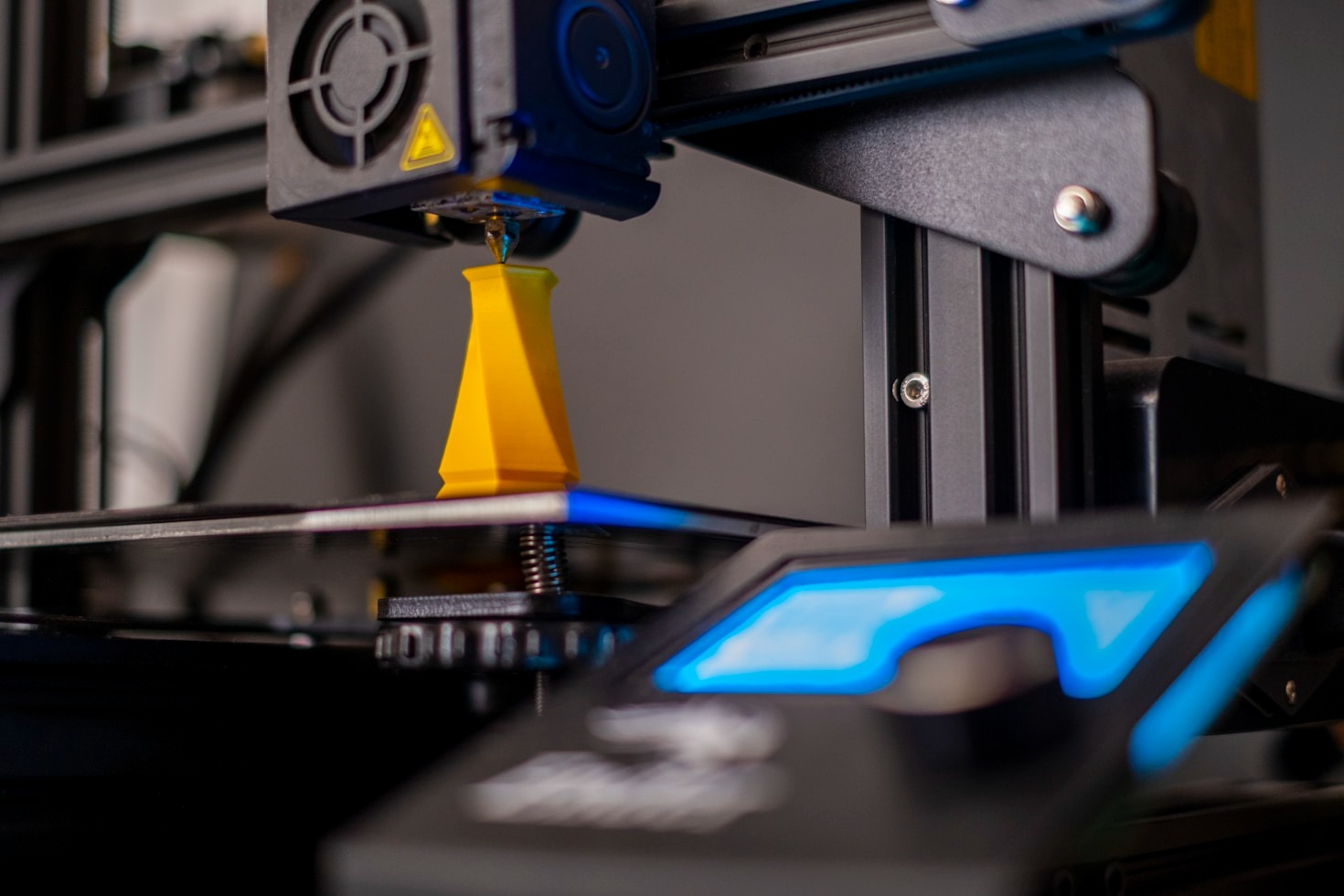
With so many 3D printing filaments available, choosing the right one can feel overwhelming. The good news? Most materials fall into a few well-understood categories—and once you know what they’re good at, picking the perfect filament becomes easy.
The table below breaks down the most popular options and what they’re best used for.
Common 3D Printing Filaments: Pros, Cons & Best Uses
| Filament | Pros | Cons | Best For |
|---|---|---|---|
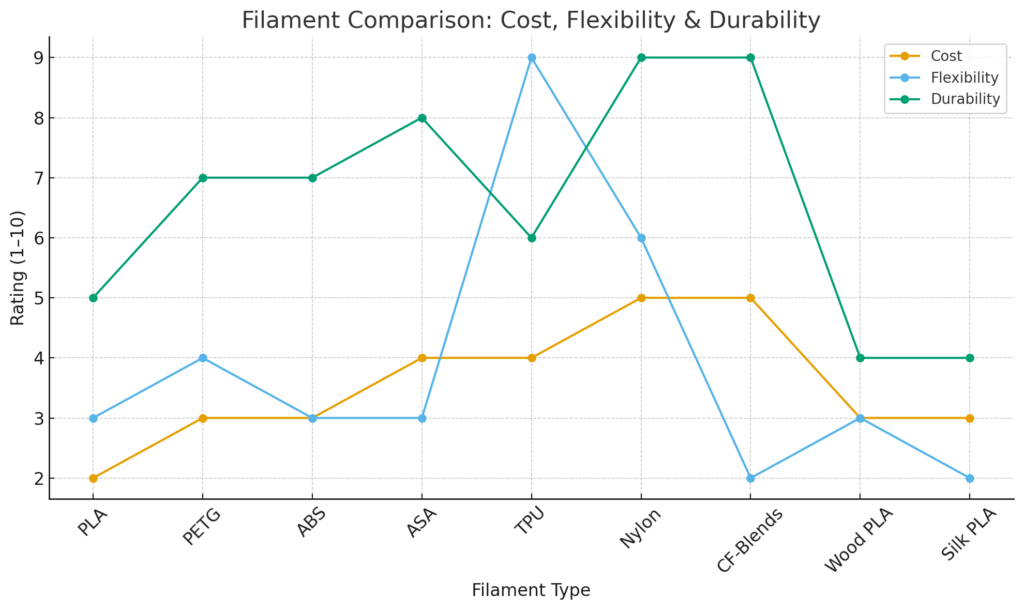
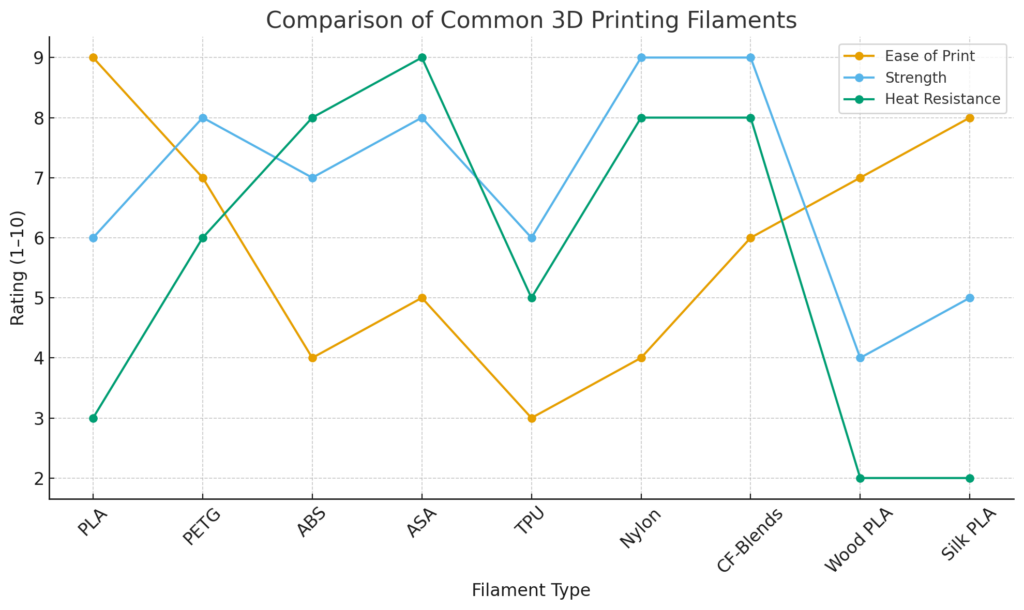
| PLA | Easy to print, low warp, eco-friendly, huge colour range | Not heat-resistant, slightly brittle | Beginners, décor items, prototypes, toys |
| PETG | Strong, flexible, great layer adhesion, food-safe options | More stringing, needs good cooling | Household items, functional prints, containers |
| ABS | Durable, heat-resistant, can be smoothed with acetone | Warps easily, strong fumes, prefers an enclosure | Tooling, automotive parts, outdoor items |
| ASA | UV-resistant ABS alternative, excellent outdoors | Needs an enclosure, higher print temps | Garden tools, outdoor fixtures, functional parts exposed to sun |
| TPU / Flexible | Rubber-like, tough, bendable | Harder to print fast, needs direct drive for best results | Phone cases, gaskets, grips, toys |
| Nylon | Very strong, tough, abrasion-resistant | Absorbs moisture, needs high temps | Mechanical parts, hinges, gears |
| Carbon-Fibre Blends (PLA-CF, PETG-CF, Nylon-CF) | Extremely stiff, lightweight, premium look | Abrasive—requires hardened nozzle | Drones, brackets, high-strength lightweight parts |
| Wood-Filled PLA | Beautiful wood-like finish, easy to sand/stain | Can clog small nozzles, less strong | Decorative prints, art pieces |
| Silk PLA | Glossy finish, great for display | Slightly weaker than standard PLA | Figurines, vases, aesthetic prints |
How to Choose the Right Filament (Quick Guide)
1. Printing something decorative?
Go with PLA or Silk PLA. They’re easy, clean, and look great.
2. Need strength for everyday use?
Choose PETG. It’s durable without being difficult.
3. Printing something for outdoors?
Pick ASA (best) or ABS.
4. Need flexibility or impact resistance?
Use TPU or Nylon depending on how flexible you want it.
5. Want maximum stiffness and premium quality?
Try carbon-fibre blends, but make sure you have a hardened nozzle.
6. Want something unique or artistic?
Wood-fill, metal-fill, or silk PLA bring a totally different look to your prints.
Final Tip
Start with PLA to get comfortable. As you learn, experiment with small test prints in other materials—you’ll quickly discover which ones fit your projects (and printer) best.to elaborate on specific points, ensuring that each sentence builds on the last to maintain a cohesive flow. You can include data, anecdotes, or expert opinions to reinforce your claims. Keep your language concise but descriptive enough to keep readers engaged. This is where the substance of your article begins to take shape.